AMERICAN NURSE EXAM PREP 2026
Prepia IncEducation
4.84.00 Reviews
- Version
- 2.1.020
- Installs
- 10.00K
- Age Rating
- Everyone
Screenshots
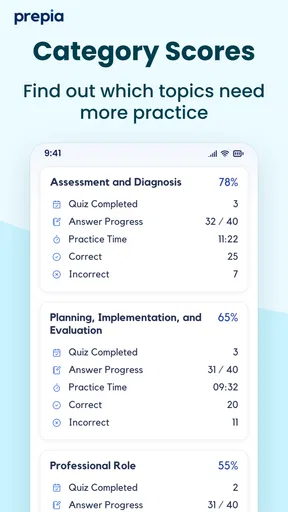
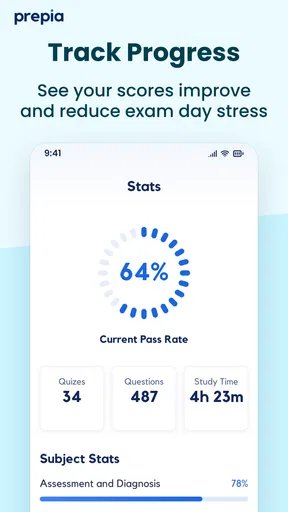
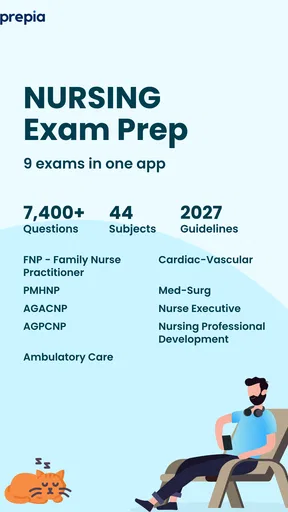
Our Review of AMERICAN NURSE EXAM PREP 2026
 Analysis by Appyee
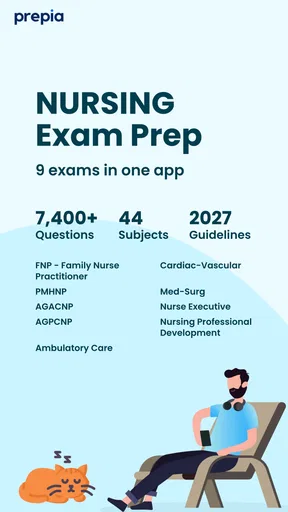
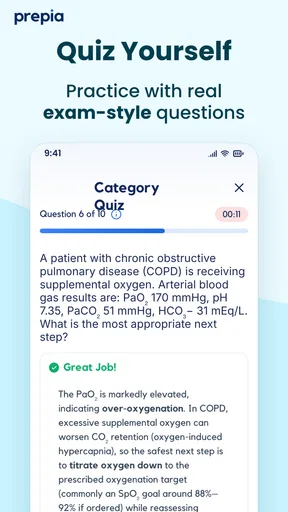
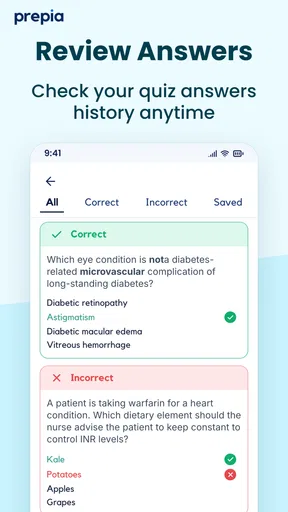
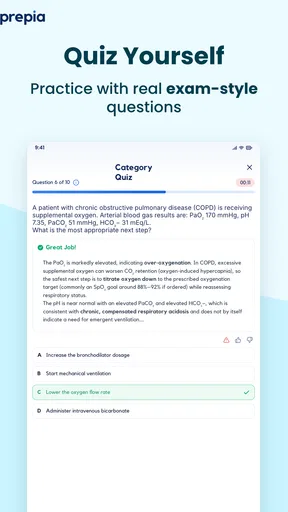
Preparing for a nursing exam is rarely difficult because of a lack of material. The harder problem is deciding what to study when time is limited, then returning to it often enough for the information to stick. AMERICAN NURSE EXAM PREP 2026 is built around that practical need. It is a free education app from Prepia Inc. focused on practice questions and study guides for PMHNP, MEDSURG, AGACNP, and other American nursing exam paths.
My first impression is that this is a revision tool rather than a complete nursing course. That distinction matters. It can help turn a spare part of the day into a short study session, especially when I already know which exam area needs attention. It is less convincing as a single source for learning an unfamiliar subject from the ground up. The app’s real test is therefore not whether it feels useful during the first few days, but whether it remains easy and worthwhile to open after the initial motivation disappears.
From a promising first week to a sustainable study habit
I’d use the first week to find a rhythm, then make the routine small enough to survive busy shifts, classes, and tired evenings. A useful next step is to choose a regular cue—such as finishing lunch or settling in after a commute—so opening the app depends less on motivation. That makes it easier to notice whether its question-led approach fits the way I actually study.
Why the opening sessions feel useful
The app’s strongest early appeal comes from its direct purpose. Instead of asking me to assemble notes, search through broad nursing websites, or carry a large textbook everywhere, it places exam-oriented practice and study material in one mobile learning space. That makes it a natural choice for a commute, a lunch break, or the quiet minutes before bed.
I also like the way the subject focus can make a study session feel more manageable. PMHNP, MEDSURG, and AGACNP preparation involve different bodies of knowledge and different ways of thinking. A learner who has already chosen a track can approach the app with a clearer question: do I need more exposure to clinical scenarios, more recall practice, or a quick review of a weak area? That mindset is more productive than opening a general nursing reference with no plan.
The app is free to install, which lowers the barrier to trying it. Its Everyone content rating also makes the product broadly accessible from a store perspective, although the intended audience is clearly nursing students and exam candidates rather than casual learners. It has passed the early adoption stage with over ten thousand installs and an average rating of 4.8 from around one hundred fifty ratings. Those figures suggest a positive first impression among its current audience, but I would still treat them as a starting signal rather than proof that it will match every learner’s study style.
A realistic first-week routine
If I were beginning with this app, I would avoid opening it randomly and tapping through questions until I became tired. A better first-week approach is to assign each session a job. On the first day, I would sample the available material and note which exam direction feels most relevant. On the next few days, I would use short question sessions, writing down the reason behind every uncertain answer rather than recording only the final choice. At the end of the week, I would revisit those notes and decide whether the app is helping me recognize patterns or merely encouraging quick guesses.
That last distinction is important. Practice questions can create a satisfying feeling of progress even when the underlying understanding is shallow. I get more value when I pause after an error and explain why the correct option is safer, more appropriate, or more consistent with the clinical situation. The app can provide the prompt, but the learner still has to supply the reflection. For nursing preparation, that extra step is often more valuable than racing through a large number of items.
One useful habit is to separate “wrong” from “uncertain.” If I guessed correctly, I would still mark the topic for review because a lucky answer does not demonstrate reliable knowledge. This turns the app into a diagnostic tool. It helps show where confidence is inflated, which is a more useful finding than a simple success percentage. That workflow is one of the practical reasons I would keep a separate notebook or digital note alongside the app.
Where it fits beside traditional study tools
Compared with a printed review book, the app is more convenient for brief sessions and easier to carry between locations. A book is often better for sustained reading, detailed explanations, and building a connected understanding of a large topic. Compared with free web searches, the app offers a more focused exam-preparation context, while web searches may provide broader references but also introduce distractions and uneven quality.
It also occupies a middle ground beside flashcard apps. Flashcards are excellent for compact facts, terminology, and repeated recall. Practice questions are better for choosing between plausible clinical answers and dealing with the wording of an exam prompt. I would not replace every other study method with AMERICAN NURSE EXAM PREP 2026. I would use it as the question-based part of a larger routine, alongside official exam guidance, class material, and a trusted nursing reference.
What changes after the novelty fades
The first week is usually the easiest period for any study app. New screens, a fresh plan, and the feeling of getting organized can create momentum. The more meaningful question is whether the app continues to solve a recurring problem. In this case, that problem is the need for repeated, focused retrieval practice without carrying a full study setup.
For me, the app earns continued use when I can open it with a specific purpose: reviewing a weak subject, testing recall after reading a chapter, or checking whether I can still reason through a topic several days later. It loses value when I use it as a passive activity, treating every completed question as progress without investigating mistakes. The product is therefore capable of supporting a durable habit, but it does not create that habit automatically.
Building month-to-month value
Long-term usefulness depends on rotation. I would not repeat the same narrow topic every day, because familiarity with a question style can become confused with mastery. A better monthly pattern would alternate focused review with mixed practice. Focused sessions help repair a weakness; mixed sessions reveal whether that knowledge survives when the subject changes unexpectedly.
Another effective approach is to revisit errors at increasing intervals. I might review a difficult question the next day, then again later in the week, and once more after a longer gap. The exact schedule can be adjusted around clinical placement, work, or classes. What matters is that the app becomes a trigger for spaced recall rather than a one-time checklist.
This is also where the study guides matter. I would use them before or after practice questions depending on the problem. If I lack the basic concept, I need a guide or textbook first. If I understand the concept but keep missing application questions, I need to return to the question and analyze the wording. Treating every mistake as a reading problem wastes time; treating every mistake as a memory problem does the same.
Who is most likely to keep using it
The best fit is a nursing learner who already has a target exam area and wants a convenient way to practice regularly. It should also suit someone who studies in uneven blocks of time. A person who can spare a short session between responsibilities may gain more from a mobile question resource than from a large course that requires a fixed desk schedule.
It may be particularly useful during the middle of preparation, when the learner has covered the main material and needs to identify gaps. At that stage, questions can expose weak decision-making more quickly than rereading familiar notes. It can also serve as a low-pressure way to restart studying after a break, since opening a short practice session feels less demanding than planning an entire evening.
I would be more cautious about recommending it as the only resource for someone starting nursing content from zero. A question app can point to gaps, but it may not provide the full teaching sequence needed to build a reliable foundation. Learners who need extensive explanations, instructor feedback, or a structured calendar may prefer a comprehensive review program. The app is more convincing as a companion than as a complete replacement for formal preparation.
The cost question and the point where value changes
The download is free, but in-app purchases range from $9.99 to $49.99 per item. That means the practical value depends on what a learner can do without paying and whether the additional material fits a genuine study need. I would begin with the free experience rather than committing immediately. Before purchasing anything, I would ask whether the available content already helps me establish a routine and whether the paid material addresses a specific weakness.
A purchase makes more sense when it replaces a resource I would otherwise buy, or when it gives structure to preparation that I have struggled to maintain alone. It makes less sense if I am buying out of anxiety, collecting study material without using it, or expecting payment to solve an inconsistent schedule. The app’s free entry is helpful, but the paid range means users should judge recurring usefulness, not just the excitement of accessing more content.
Maintenance: the work the learner still has to do
The main maintenance burden is not technical; it is cognitive and organizational. I have to decide what to practice, keep track of uncertain topics, and return to mistakes. Without that effort, a question bank can become a stream of disconnected taps. The app can make practice available, but it cannot decide whether I truly understood why an answer was right.
I would keep a compact error log with three columns: the topic, the reason I missed it, and the rule or distinction I need to remember. This is more useful than copying every question. Over time, the log becomes a personalized revision guide, while the app provides the repeated testing needed to check whether the correction has lasted. That combination gives the application a role beyond simple entertainment or score chasing.
Version 2.1.020 is the current version, and the app supports Android 7.0 and later. That broad system compatibility should make it approachable for people using older Android devices, but compatibility alone does not guarantee that the experience will feel equally comfortable on every screen. On a smaller phone, dense medical wording may be slower to read, so I would choose a quiet setting and avoid rushing through questions simply because the session is mobile.
Sources of fatigue during repeated preparation
Repetition is useful until it becomes mechanical. If every session feels identical, I may start recognizing familiar wording rather than retrieving the underlying knowledge. This is a common risk with any practice-focused app, and it is especially serious when the learner begins selecting answers based on pattern recognition. Changing the order of topics, mixing strong and weak areas, and explaining answers aloud can reduce that effect.
Another source of fatigue is emotional rather than academic. A series of wrong answers can make a learner avoid the app, while a series of easy answers can create false confidence. I would judge a session by the quality of the review, not by whether the result looks impressive. A difficult set that reveals a real gap can be more valuable than a comfortable set that confirms what I already know.
There is also a risk of overloading a short break with serious study. If I am exhausted after a clinical shift, forcing a long session may produce little retention. In that situation, I would use the app for a small diagnostic set or postpone it. Maintaining a habit does not mean using the app at maximum intensity every day; it means keeping the next useful session realistic enough to happen.
How I would combine it with a broader plan
My preferred workflow would begin with a primary source for learning the material, followed by this app for retrieval and exam-style decision practice. After a study chapter or lecture, I would use related questions while the ideas are still fresh. A few days later, I would return without rereading first. That second attempt tells me whether the knowledge is available independently or only recognizable when the notes are open.
I would also compare recurring errors against the official requirements for the intended exam. If the app highlights a topic that is outside my immediate goal, I would not automatically spend hours on it. Conversely, if an important area is weak in my external preparation but does not appear often in my sessions, I would deliberately add it to the plan. The app should inform my priorities, not silently define them.
For a study group, the questions could support discussion, but I would not assume that a shared answer is automatically a sound explanation. Each person should explain the reasoning, especially when two options seem clinically plausible. That turns a solitary mobile tool into a prompt for deeper conversation without pretending that the app replaces an instructor.
When I would choose something else
I would look elsewhere if I needed a full course with lectures, scheduled assignments, live teaching, or extensive personalized feedback. I would also choose a specialized reference first if my immediate task were detailed bedside consultation rather than exam preparation. The focus here is revision for American nursing exams, not a universal solution for every nursing-related need.
I would hesitate if I disliked learning through questions or if I tended to skip explanations after guessing. In that case, a guided textbook or instructor-led program may produce better results. Likewise, a learner preparing for a completely different qualification should verify that the app’s PMHNP, MEDSURG, AGACNP, and related coverage matches the actual exam objective before investing serious time or money.
My long-term verdict
After the initial novelty fades, AMERICAN NURSE EXAM PREP 2026 still has a credible role because its central use case repeats throughout exam preparation: short, targeted practice whenever a learner has a few available minutes. That recurring need is stronger than the temporary appeal of downloading a new study app. The free starting point also makes it reasonable to test the routine before deciding whether paid items are worthwhile.
My recommendation is conditional but positive. I would recommend it to nursing students and exam candidates who want a portable question-and-guide companion, especially those who already have core study material and need more frequent retrieval practice. I would not recommend relying on it alone for foundational learning, detailed clinical reference, or structured teaching. Its lasting value comes from how thoughtfully the learner reviews mistakes and spaces out practice.
Prepia Inc has made a focused education app rather than an all-purpose nursing platform, and that focus is both its strength and its boundary. If I use it with an error log, a rotating schedule, and a reliable primary reference, it can earn a regular place in my preparation routine. If I simply tap through questions for reassurance, the benefit will fade quickly. In the end, the app is worth keeping installed when it helps me study deliberately, not merely study more often.
Verdict
Strengths of AMERICAN NURSE EXAM PREP 2026
- Covers key NCLEX-style topics for focused nursing exam preparation.
- Practice questions help identify weak areas before test day.
- Useful for studying in short sessions during commutes or breaks.
- Clear explanations can reinforce important nursing concepts.
- Suitable for learners seeking an additional study resource.
Limitations of AMERICAN NURSE EXAM PREP 2026
- Content may not fully reflect the latest exam-plan updates.
- Some learners may find the question explanations too brief.
- Requires consistent self-study discipline without instructor support.
- Practice performance may not match results on the actual NCLEX.
- Advanced users may want more detailed rationales and case studies.
Other Releases by Prepia Inc
View All
Prepia PTCB PTCE Exam Prep
Education4.7

ASWB BSW LCSW MSW | Exam Prep
Education4.7

ATI TEAS Exam Prep 2026
Education4.7

NREMT EMT EXAM PREP 2026
Education4.6
Similar Picks in This Category
View All
Duolingo: Language Lessons
Duolingo4.7

Google Classroom
Google LLC2.8

Unacademy: Learn & Crack Exams
Unacademy3.2

Bible App for Kids
Life.Church4.4

Cake - Learn English & Korean
Cake Corp.4.7

Brainly: AI Homework Helper
Brainly4.5
Frequently Asked Questions
What is American Nurse Exam Prep 2026, and who is it designed for?
American Nurse Exam Prep 2026 is a study app intended for nursing students, graduates, and internationally educated nurses preparing for U.S. nursing examinations, particularly the NCLEX-RN or NCLEX-PN. It typically combines practice questions, explanations, quizzes, and review materials in one place. Before downloading, confirm that the app’s content matches your exam level, state requirements, and current test plan.
Does American Nurse Exam Prep 2026 include realistic NCLEX-style practice questions?
The app is designed around exam-style preparation and may include questions covering areas such as safe and effective care, pharmacology, health promotion, psychosocial integrity, and clinical judgment. Users should still check the current question count, available categories, and whether detailed rationales are provided. Practice questions are valuable, but they should supplement official NCLEX resources rather than replace them.
Can I use the app without an internet connection?
Offline access depends on the specific version and the features enabled by the developer. Some apps allow users to download question sets or review materials, while progress synchronization, advertisements, updates, and certain explanations may require an internet connection. If offline studying is important to you, review the app listing and test the download options after installation before relying on it during travel or in areas with limited connectivity.
Is American Nurse Exam Prep 2026 free to download and use?
The application may be free to install while offering optional in-app purchases, subscriptions, premium question banks, or ad removal. The exact pricing and included features can vary between Android and iOS and may change over time. Check the store listing carefully before starting a trial, especially for automatic renewal terms, refund policies, and whether the free version provides enough content for your preparation goals.
Can this app guarantee that I will pass the nursing exam?
No exam-preparation app can guarantee a passing result. American Nurse Exam Prep 2026 can support your study routine by helping you identify weak subjects, practice time management, and become familiar with nursing-style questions, but success also depends on your knowledge, clinical reasoning, consistency, and understanding of the official exam requirements. Use it alongside current textbooks, official test-plan materials, and, when needed, guidance from qualified instructors.
